-
Shop
- Adidas
- Advanced Technologies
- Apple Accessories
- Armani
- Arts, Crafts & Hobbies
- Astrology & Tarot Products
- Bathroom
- Best-Sellers
- Black Friday Sale
- Calvin Klein
- Car Accessories
- Christmas Collection
- Dating & Social Skills
- Denim
- 7FOR
- AGOLDE
- Antony Morato
- Armani Exchange
- Boss
- Brunello Cucinelli
- Calvin Klein Jeans
- Costume National
- Desigual
- Diesel
- Dolce & Gabbana
- Dsquared²
- Ermanno Scervino
- Fendi
- Gianni Lupo
- Guess Jeans
- Ichi
- Just Cavalli
- Lee
- Levi's
- Liu Jo
- Morgan De Toi
- Mother Denim
- Only
- Pepe Jeans
- Pinko
- Replay
- Tommy Hilfiger Jeans
- Valentino
- Vero Moda
- Digital Resources
- Easter Products
- Education & Learning
- Fall 2025 Fashion Best-Sellers
- Family & Parenting
- Fashion
- Accessories
- Alexander McQueen
- Bags
- Bags & Wallets
- Balenciaga
- Belts
- Blazers
- Blouses & Shirts
- Bottega Veneta
- Bottoms
- Brunello Cucinelli
- Burberry
- Chanel
- Chloé
- Dior
- Dolce & Gabbana
- Dresses
- Etro
- Fendi
- Gucci
- Hats & Hair Accessories
- Hoodies & Sweatshirts
- Jacquemus
- Jewelry
- Jil Sander
- Jimmy Choo
- Kiton
- Laptop Sleeves
- Luggage
- Luggage Bags
- Men's Fashion
- Miu Miu
- Off-White
- Outerwear
- Passport Covers
- Phone Cases
- Prada
- Rick Owens
- Saint Laurent
- Scarves
- Shoes
- Skirts
- Socks
- Socks & Tights
- Sunglasses
- Sweaters & Cardigans
- The Row
- Tom Ford
- Tops & Shirts
- Trousers
- Tumblers
- Valentino
- Valentino Garavani
- Versace
- Vivienne Westwood
- Watches
- Fashion Accessories
- Father's Day
- Fitness & Yoga Guides
- Furniture
- Gadgets
- Gift Guide Collection
- Health & Beauty
- Health & Wellness
- Home & Garden
- Home Electronics
- Home Supplies
- Independence Day
- Kids & Babies
- Kitchen
- Kitchen Best-Sellers
- Lighting
- Luxury Brands Collection
- Mother’s Day
- Nike
- Patio, Lawn & Garden
- Personal Growth
- Pet Care
- Pets
- Pinterest Best-Sellers
- Samsung Accessories
- Sport & Outdoors
- Summer 2025 Fashion Collection
- Super Deals
- TikTok Growth & Monetization Mastery
- Tommy Hilfiger
- Travel
- Travel & Outdoors
- Wealth
- Wealth Building
- Budgeting & Saving
- Cryptocurrency Investing
- Debt Management
- Entrepreneurship & Business Growth
- Family Finance & Budgeting
- Financial Independence
- Financial Mindset & Psychology
- Financial Planning
- Frugal Living & Expense Hacks
- Goal Setting
- High-Income Skills
- Investing Basics
- Leadership
- Motivation
- Networking & Mentorship
- Passive Income Strategies
- Real Estate Investing
- Side Hustles
- Stock Market Investing
- YouTube Shorts Best-Sellers
- Popular
- Best deals
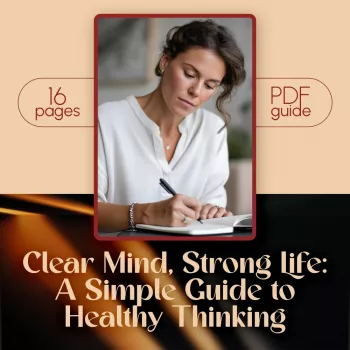
Clear Mind, Strong Life: A Guide to Healthy Thinking

Healthy thinking does not mean having a perfectly positive outlook. It can mean pausing long enough to notice what is going through your mind, consider the situation, and decide how you want to respond. Clear Mind, Strong Life is our digital mental wellness guide for anyone interested in reflecting on that process.
Whether you are exploring the topic for the first time or returning to it after a busy stretch, we hope you can approach it with patience. Small moments of reflection can be worthwhile without needing to turn every thought into a problem to solve.
A digital guide for thoughtful moments
Clear Mind, Strong Life: A Simple Guide to Healthy Thinking is an eBook offered as a PDF download. Its digital format makes it a convenient resource to keep on a device and revisit when you want to spend some time considering healthy thinking.
We list the guide for $5.99 USD. You can Explore Clear Mind, Strong Life and decide whether a digital resource fits the way you like to read.
A PDF may be appealing if you prefer having a resource available without adding another physical item to your space. You might read when you have a quiet break or return to the topic when a situation has given you something to consider. There is no need to treat reflection as a race or measure yourself against someone else’s routine.
Making room to reflect
Choose a moment when you can give yourself a little breathing room. That might be a few minutes at a kitchen table, a break between tasks, or a quiet point in your evening. Consider one thought or situation that has been on your mind, rather than trying to examine everything at once.
Try approaching what you notice with curiosity. You can ask, “What am I telling myself about this?” without judging yourself for the answer. A difficult thought is not a failure, and reflection does not require you to eliminate every uncomfortable feeling.
These are general ideas for reflection, not descriptions of confirmed exercises in the eBook. You can adapt them to your own preferences, including stepping away if a topic feels too intense to explore on your own.
Simple ways to approach healthy thinking
One starting point is to distinguish what happened from the interpretation you placed on it. For example, if someone has not responded to a message, the observable fact is that you have not received a reply. The assumption might be that they are upset with you. There may be other explanations, even if you do not yet know which one is true.
From there, consider a perspective that accounts for what you know and what remains uncertain. You might ask whether there is a useful next step, such as following up later, or whether the situation can wait. This kind of pause can help you make a more deliberate choice without demanding an immediate answer.
Balanced thinking does not mean ignoring a genuine problem or forcing yourself to feel positive. If a concern needs attention, acknowledging it can be part of a balanced response. The goal is to leave room for a fuller view, including your needs, the available facts, and the limits of what you can control.
Everyday reflection prompts
| Situation | Reflection prompt |
|---|---|
| A plan does not go as expected | What happened, and what can I reasonably do next? |
| A self-critical thought appears | Would I speak to someone else in the same way? |
| A task feels overwhelming | What is one manageable next step? |
You can use these questions as starting points rather than rules. If an answer is not immediately clear, it is fine to leave it open and return later. For more background on the relationship between thoughts, feelings, and behavior, the NHS overview of cognitive behavioral therapy offers an introduction to a professional therapeutic approach.
Who might enjoy this guide?
Our guide may appeal to you if you are looking for a simple digital resource centered on healthy thinking. It may also suit your preferences if you like to keep reading material available for moments when you want to revisit a topic at your own pace.
Consider where you would most comfortably read a PDF, whether that is a phone, tablet, or computer. If you read on a compatible USB-C device and need a wall charger, our 65W GaN USB C Fast Wall Charger with Quick Charge is another option in our store. Before choosing a charger, make sure it is compatible with your device and its charging requirements.
Reflection can look different from day to day. You might prefer reading quietly, writing down a question, or simply noticing a pattern in your thoughts. Choose an approach that feels manageable rather than adding pressure to an already full schedule.
Support beyond self-reflection
A self-help guide is not a substitute for diagnosis or mental health care from a qualified professional. If distress persists or makes it difficult to function in daily life, consider reaching out to a mental health professional or another qualified health care provider.
The National Institute of Mental Health’s guide to caring for your mental health provides information on self-care and when to seek professional help. Our team also invites you to explore the Clear Mind, Strong Life product listing if you would like a digital guide to keep on hand.
FAQ
What format is Clear Mind, Strong Life?
It is a digital eBook offered as a PDF download.
Do I need to be experienced with mental wellness topics to use the guide?
No prior experience is needed to explore the topic. We present the guide as a simple guide to healthy thinking.
Can this guide replace mental health treatment?
No. A self-help guide is not a substitute for diagnosis or care from a qualified mental health professional.
Recommended for you


How to Style a Korean-Style Drawstring Dumpling Bag
Oct 28, 2026







Leave a comment