-
Shop
- Adidas
- Advanced Technologies
- Apple Accessories
- Armani
- Arts, Crafts & Hobbies
- Astrology & Tarot Products
- Bathroom
- Best-Sellers
- Black Friday Sale
- Calvin Klein
- Car Accessories
- Christmas Collection
- Dating & Social Skills
- Denim
- 7FOR
- AGOLDE
- Antony Morato
- Armani Exchange
- Boss
- Brunello Cucinelli
- Calvin Klein Jeans
- Costume National
- Desigual
- Diesel
- Dolce & Gabbana
- Dsquared²
- Ermanno Scervino
- Fendi
- Gianni Lupo
- Guess Jeans
- Ichi
- Just Cavalli
- Lee
- Levi's
- Liu Jo
- Morgan De Toi
- Mother Denim
- Only
- Pepe Jeans
- Pinko
- Replay
- Tommy Hilfiger Jeans
- Valentino
- Vero Moda
- Digital Resources
- Easter Products
- Education & Learning
- Fall 2025 Fashion Best-Sellers
- Family & Parenting
- Fashion
- Accessories
- Alexander McQueen
- Bags
- Bags & Wallets
- Balenciaga
- Belts
- Blazers
- Blouses & Shirts
- Bottega Veneta
- Bottoms
- Brunello Cucinelli
- Burberry
- Chanel
- Chloé
- Dior
- Dolce & Gabbana
- Dresses
- Etro
- Fendi
- Gucci
- Hats & Hair Accessories
- Hoodies & Sweatshirts
- Jacquemus
- Jewelry
- Jil Sander
- Jimmy Choo
- Kiton
- Laptop Sleeves
- Luggage
- Luggage Bags
- Men's Fashion
- Miu Miu
- Off-White
- Outerwear
- Passport Covers
- Phone Cases
- Prada
- Rick Owens
- Saint Laurent
- Scarves
- Shoes
- Skirts
- Socks
- Socks & Tights
- Sunglasses
- Sweaters & Cardigans
- The Row
- Tom Ford
- Tops & Shirts
- Trousers
- Tumblers
- Valentino
- Valentino Garavani
- Versace
- Vivienne Westwood
- Watches
- Fashion Accessories
- Father's Day
- Fitness & Yoga Guides
- Furniture
- Gadgets
- Gift Guide Collection
- Health & Beauty
- Health & Wellness
- Home & Garden
- Home Electronics
- Home Supplies
- Independence Day
- Kids & Babies
- Kitchen
- Kitchen Best-Sellers
- Lighting
- Luxury Brands Collection
- Mother’s Day
- Nike
- Patio, Lawn & Garden
- Personal Growth
- Pet Care
- Pets
- Pinterest Best-Sellers
- Samsung Accessories
- Sport & Outdoors
- Summer 2025 Fashion Collection
- Super Deals
- TikTok Growth & Monetization Mastery
- Tommy Hilfiger
- Travel
- Travel & Outdoors
- Wealth
- Wealth Building
- Budgeting & Saving
- Cryptocurrency Investing
- Debt Management
- Entrepreneurship & Business Growth
- Family Finance & Budgeting
- Financial Independence
- Financial Mindset & Psychology
- Financial Planning
- Frugal Living & Expense Hacks
- Goal Setting
- High-Income Skills
- Investing Basics
- Leadership
- Motivation
- Networking & Mentorship
- Passive Income Strategies
- Real Estate Investing
- Side Hustles
- Stock Market Investing
- YouTube Shorts Best-Sellers
- Popular
- Best deals
65W GaN USB-C Charger: Quick Charge & PD in One
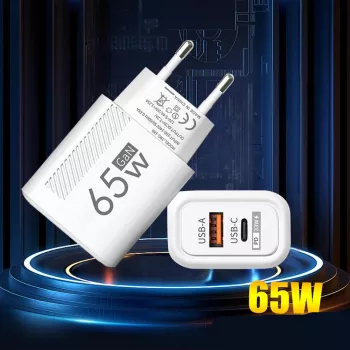
65W GaN USB-C Fast Wall Charger with Quick Charge: One Small Charger for Everyday Power
A wall charger should feel simple: plug in, charge fast, and get on with the day. Our 65W GaN USB C Fast Wall Charger with Quick Charge is built for modern devices that expect higher power from a smaller adapter—phones, tablets, and many USB‑C laptops. The goal is fewer bricks in your bag and less waiting at the outlet, without turning charging into a guessing game.
What makes a 65W GaN charger different
GaN (gallium nitride) charging designs are widely used to shrink charger size while still handling higher wattage. In everyday terms, that means you can carry one compact wall charger that’s capable of powering more of your devices, instead of packing separate low-watt bricks for your phone, tablet, and laptop.
65W is a practical “do-most-things” ceiling for daily tech. It can cover fast phone charging, steady tablet charging, and charging support for a wide range of USB‑C laptops that accept USB‑C power in the 45–65W range.
Importantly, a higher-watt charger doesn’t “force” power into your device. When your device and charger support the right standards, they negotiate what’s safe and appropriate, and your device draws what it needs. Quick Charge support is especially helpful for devices that use Qualcomm’s fast‑charging ecosystem (learn more at Qualcomm’s Quick Charge overview), while USB‑C Power Delivery (PD) is the more general fast-charging framework used across many USB‑C devices (see USB-IF’s USB Power Delivery resources).
Where 65W helps the most in real life
Travel and commuting
If your routine involves a phone, a tablet, and a USB‑C laptop, a single higher-output charger can reduce what you carry—so long as your devices support charging over USB‑C (or Quick Charge where relevant). It’s a small change that makes packing simpler and outlet time more productive.
Desk setups
At a desk, you can keep one compact charger within reach, top up your laptop during the workday, and then switch to your phone without swapping bulky adapters. That’s especially useful if you bounce between rooms or workspaces and want a consistent “grab-and-go” power option.
Shared outlets and short charging windows
In airports, cafés, libraries, or conference rooms, you often get a brief shot at an outlet. A 65W charger offers headroom so you can take advantage of fast-charging capabilities when time is tight.
Emergency charging
When your battery is low and you need usable power quickly, fast-charging standards can significantly reduce the time it takes to get back online—especially when your cable and charging protocol are matched correctly.
| Device category | Common requested power range | Why it matters when choosing a wall charger |
|---|---|---|
| Phones (USB‑C or QC devices) | 18W–30W (sometimes higher) | A 65W charger has ample headroom for fast phone charging when supported by the phone and cable. |
| Tablets | 20W–45W | Higher wattage can shorten charge times and prevent slow charging while multitasking. |
| USB‑C laptops and ultrabooks | 45W–65W (some higher) | If your laptop supports USB‑C charging in this range, a 65W charger can cover everyday charging needs. |
| Accessories (earbuds, watches, controllers) | 2.5W–15W | Lower-power devices will typically draw only what they need, even from a higher-watt charger. |
Compatibility basics: device, cable, and charging standard
Fast charging is a three-part handshake: your device, your charger, and your cable all need to support the right combination of standards and ratings.
Fast charging without the fuss: practical setup tips
For an efficiency perspective on external power supplies, the U.S. Department of Energy’s overview is a helpful reference for how modern power adapters are designed to waste less energy.
A simple pairing that makes your kit work better
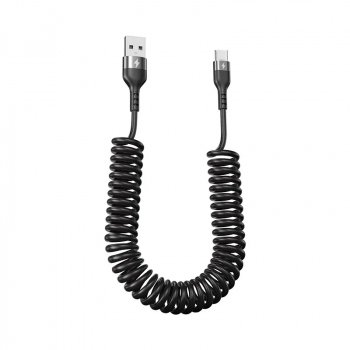
Our team sees the same pattern over and over: you can have a great charger, but the wrong cable will hold it back. If you want a tidy everyday option for bags, cars, and drawers—especially if tangles are your main pain point—pair the charger with our 66W 5A Fast Charging Spring Retractable USB Type C Cable – For Car & On-the-Go. Keeping a dedicated “fast-charge capable” cable with your wall charger helps you avoid the last-minute scramble that leads to slower charging than you expected.
Safety and everyday care
FAQ
Will a 65W charger damage a phone that only needs 20W?
No—when your phone and charger support compatible fast-charging standards, the device negotiates power and draws only what it needs. A 65W charger mainly provides headroom, so your phone can charge at its maximum supported rate with the right cable.
Why is fast charging sometimes slower than expected?
The most common reasons are a cable that isn’t rated for fast charging, a mismatch between charging standards, or the device throttling due to battery temperature. Heavy use while charging and unstable outlets or worn power strips can also reduce charging speed.
Can this replace a laptop charger?
It can for many USB‑C laptops that charge in the 45–65W range, but compatibility depends on whether your laptop supports charging over USB‑C and how many watts it requires. If your laptop needs more than 65W, it may charge slowly or maintain battery level rather than increase it under load.
Recommended for you

Genuine Leather Men’s Belt: Classic Pin Buckle Style
Oct 13, 2026







Leave a comment