-
Shop
- Adidas
- Advanced Technologies
- Apple Accessories
- Armani
- Arts, Crafts & Hobbies
- Astrology & Tarot Products
- Bathroom
- Best-Sellers
- Black Friday Sale
- Calvin Klein
- Car Accessories
- Christmas Collection
- Dating & Social Skills
- Denim
- 7FOR
- AGOLDE
- Antony Morato
- Armani Exchange
- Boss
- Brunello Cucinelli
- Calvin Klein Jeans
- Costume National
- Desigual
- Diesel
- Dolce & Gabbana
- Dsquared²
- Ermanno Scervino
- Fendi
- Gianni Lupo
- Guess Jeans
- Ichi
- Just Cavalli
- Lee
- Levi's
- Liu Jo
- Morgan De Toi
- Mother Denim
- Only
- Pepe Jeans
- Pinko
- Replay
- Tommy Hilfiger Jeans
- Valentino
- Vero Moda
- Digital Resources
- Easter Products
- Education & Learning
- Fall 2025 Fashion Best-Sellers
- Family & Parenting
- Fashion
- Accessories
- Alexander McQueen
- Bags
- Bags & Wallets
- Balenciaga
- Belts
- Blazers
- Blouses & Shirts
- Bottega Veneta
- Bottoms
- Brunello Cucinelli
- Burberry
- Chanel
- Chloé
- Dior
- Dolce & Gabbana
- Dresses
- Etro
- Fendi
- Gucci
- Hats & Hair Accessories
- Hoodies & Sweatshirts
- Jacquemus
- Jewelry
- Jil Sander
- Jimmy Choo
- Kiton
- Laptop Sleeves
- Luggage
- Luggage Bags
- Men's Fashion
- Miu Miu
- Off-White
- Outerwear
- Passport Covers
- Phone Cases
- Prada
- Rick Owens
- Saint Laurent
- Scarves
- Shoes
- Skirts
- Socks
- Socks & Tights
- Sunglasses
- Sweaters & Cardigans
- The Row
- Tom Ford
- Tops & Shirts
- Trousers
- Tumblers
- Valentino
- Valentino Garavani
- Versace
- Vivienne Westwood
- Watches
- Fashion Accessories
- Father's Day
- Fitness & Yoga Guides
- Furniture
- Gadgets
- Gift Guide Collection
- Health & Beauty
- Health & Wellness
- Home & Garden
- Home Electronics
- Home Supplies
- Independence Day
- Kids & Babies
- Kitchen
- Kitchen Best-Sellers
- Lighting
- Luxury Brands Collection
- Mother’s Day
- Nike
- Patio, Lawn & Garden
- Personal Growth
- Pet Care
- Pets
- Pinterest Best-Sellers
- Samsung Accessories
- Sport & Outdoors
- Summer 2025 Fashion Collection
- Super Deals
- TikTok Growth & Monetization Mastery
- Tommy Hilfiger
- Travel
- Travel & Outdoors
- Wealth
- Wealth Building
- Budgeting & Saving
- Cryptocurrency Investing
- Debt Management
- Entrepreneurship & Business Growth
- Family Finance & Budgeting
- Financial Independence
- Financial Mindset & Psychology
- Financial Planning
- Frugal Living & Expense Hacks
- Goal Setting
- High-Income Skills
- Investing Basics
- Leadership
- Motivation
- Networking & Mentorship
- Passive Income Strategies
- Real Estate Investing
- Side Hustles
- Stock Market Investing
- YouTube Shorts Best-Sellers
How to Make a DIY Nixie Clock: A Beginner’s Guide
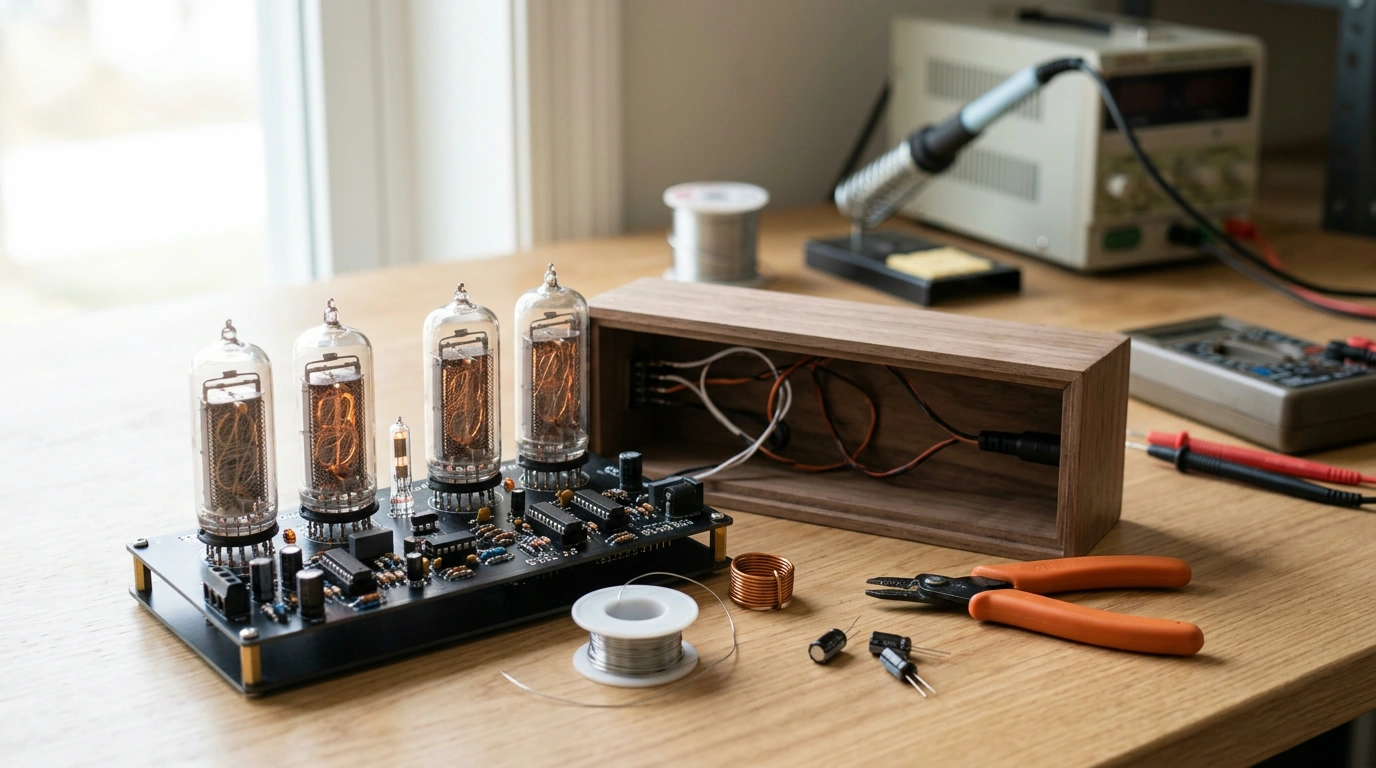
How do you make a DIY Nixie clock?
A DIY Nixie clock brings together glowing vintage-style numerals, a clock circuit, and an enclosure you can make your own. The simplest route is to start with a complete clock kit: its circuit board, tubes, and components are selected to work together, leaving you to focus on careful assembly and finishing.
For a wooden enclosure and a closer look at the build process, see our DIY wooden Nixie tube clock build guide.
What do you need before you start?
Choose a kit with a compatible power supply and instructions for its specific tube type. You’ll also need a soldering iron, solder, wire cutters, a multimeter, and basic hand tools. If you’re making a wooden case, gather your wood, measuring tools, drill, and finish as well.
Give yourself a clean, well-lit workspace and enough time to identify each component before installing it. Nixie tubes are glass, so handle them gently and avoid putting pressure on their leads.
How do you assemble the clock?
1. Build the circuit board
Follow the kit’s assembly order, typically starting with lower-profile components and moving on to taller parts and connectors. Match polarized components to the markings in the instructions, and inspect each solder joint for bridges or loose connections.
2. Install the tubes and controls
Fit each tube or socket in the orientation specified by the kit. Connect the buttons and power input as directed, keeping wires neat and clear of mounting points. Don’t force a tube into a socket.
3. Test before closing the case
Use the specified power supply and follow the kit’s testing procedure. Confirm that the display lights correctly and that the controls respond before mounting everything in the enclosure. Disconnect power before making adjustments.
How should you finish the enclosure?
Measure the assembled board and tubes before cutting openings. Leave room around the electronics and provide ventilation where the kit instructions call for it. Secure the board with suitable standoffs, protect exposed wiring, and choose a finish that has fully cured before final assembly.
Nixie clocks use potentially hazardous high voltage, even when powered by a low-voltage adapter. Unplug the clock before working on it, allow capacitors to discharge, and verify with a multimeter before touching the circuit. If you’re not comfortable working safely around high voltage, ask a qualified electronics technician for help.
FAQ
Do Nixie tubes wear out?
Yes. Nixie tubes have a finite service life, and frequently used digits can age unevenly. A clock with a digit-cycling feature can help distribute use across the numerals.
Recommended for you


Men’s Quartz Chronograph with Sapphire and Ceramic
Nov 20, 2026
Armani Men’s Stainless Steel Chronograph Watch Guide
Nov 20, 2026







Leave a comment